
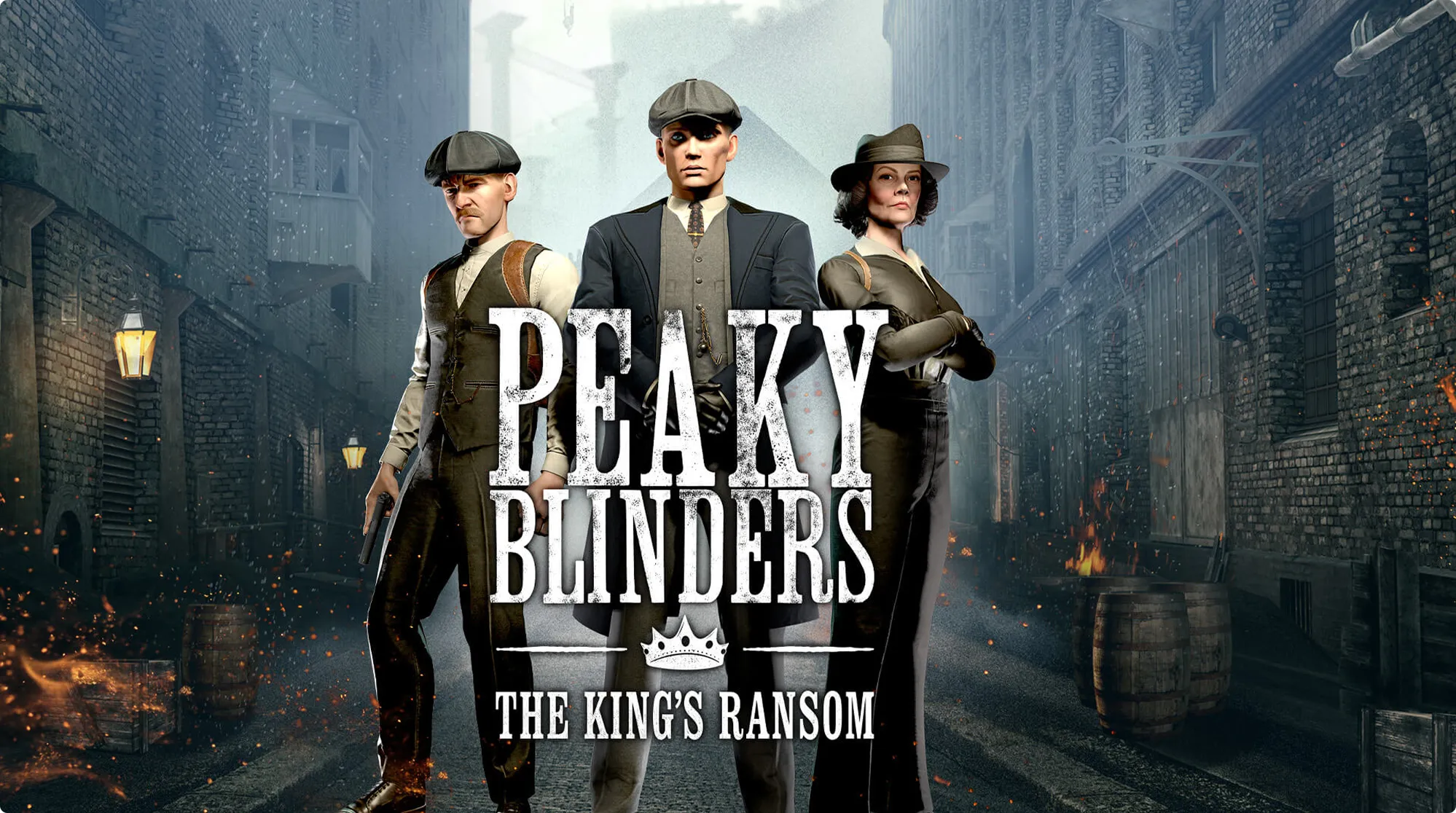
Peaky Blinders: The King's Ransom
October 2021 – September 2023
Role: Junior Game Designer
Peaky Blinders: The Kings Ransom is a Narrative driven action/adventure game. It follows it's own story set between seasons 4 and 5 of the main show. Players get to interact with the main cast through dynamic and interactive cutscenes, as well as explore the worlds of Industrial Birmingham, and the Docks of London.
Key Responsibilities
- Designed and iterated on level layouts to support stealth gameplay, player flow, and multiple infiltration routes
- Produced 2D layout documentation to plan spatial structure, player paths, and enemy placement
- Blocked out levels and iterated based on playtesting, feedback, and design goals
- Collaborated closely with Lead Design, Narrative Design, and Art to align gameplay, story, and visual direction
- Implemented gameplay logic and level scripting using engine tools and visual scripting
- Iterated on levels to meet performance, comfort, and usability constraints specific to VR
Design Pillars
Player presence is central
Positioning them as part of the show's world.
Narrative moments with the Shelbys
Staged to encourage interaction rather than observation.
Historical accuracy
Level design reinforces fidelity to the source material.
Responsive gunplay
Prioritises responsiveness and pacing to support tense, cinematic encounters.
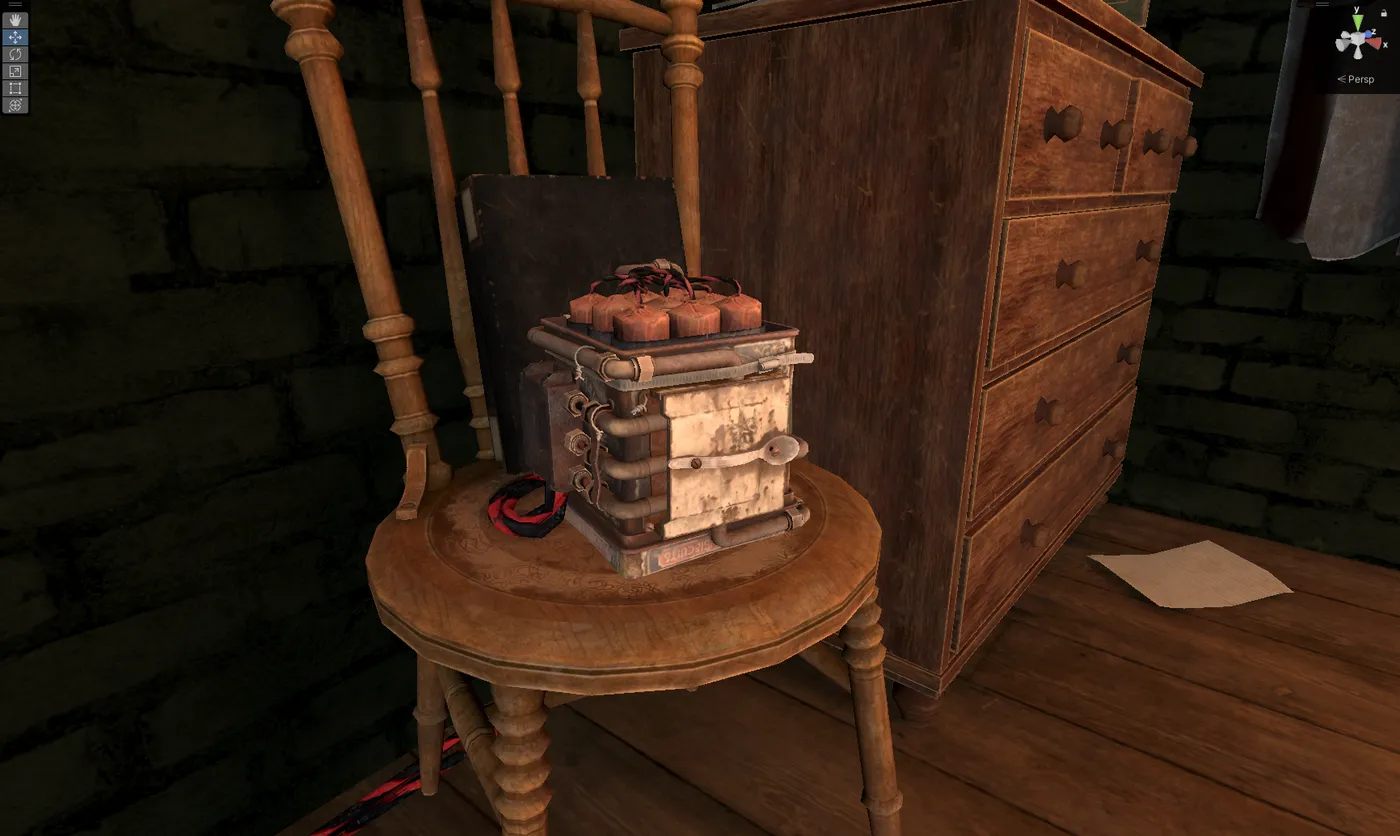
Betting Shop Shootout
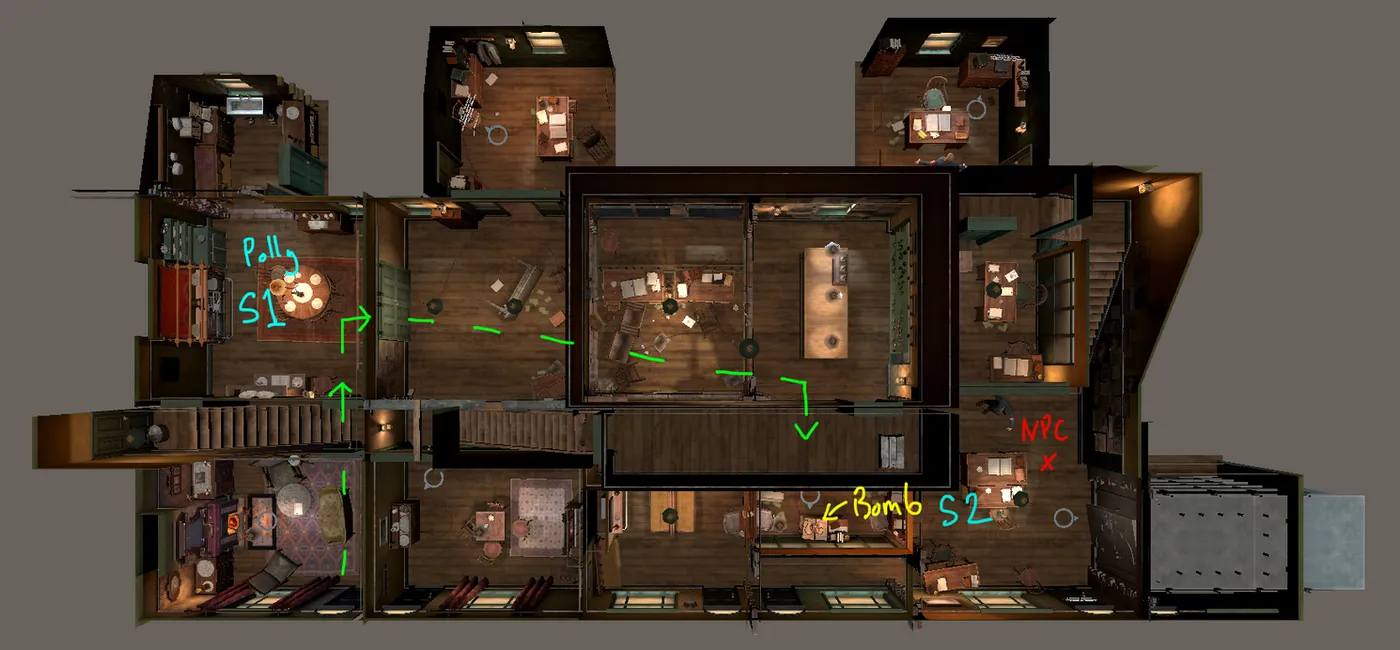
Inherited flow
The initial design for the Betting Shop level focused on a guided narrative moment, but I saw an opportunity to better leverage the space. I revised the level flow to increase player engagement while supporting the narrative.
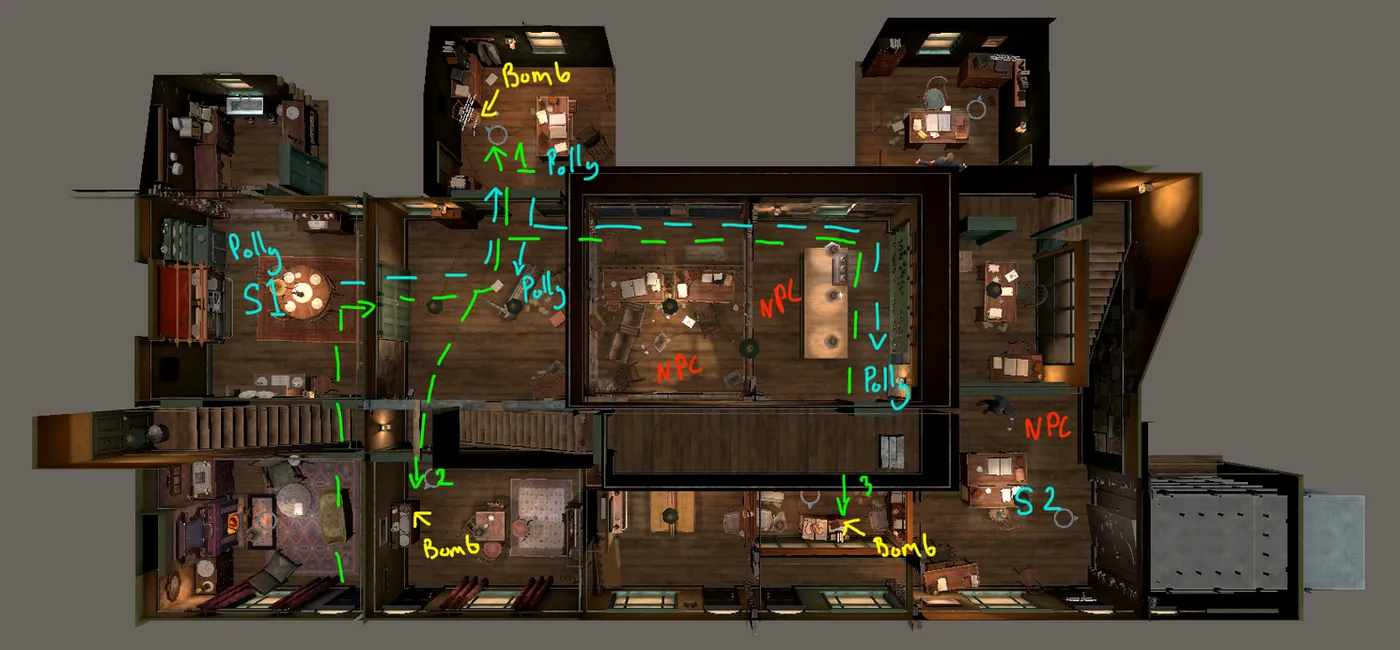
Updated Flow
After a brief narrative setup, the player disarms multiple bombs under cover from Polly, creating tension through urgency and player vulnerability. Enemy spawns and Polly's advance are driven by player position and bomb progression, allowing the encounter to adapt dynamically.
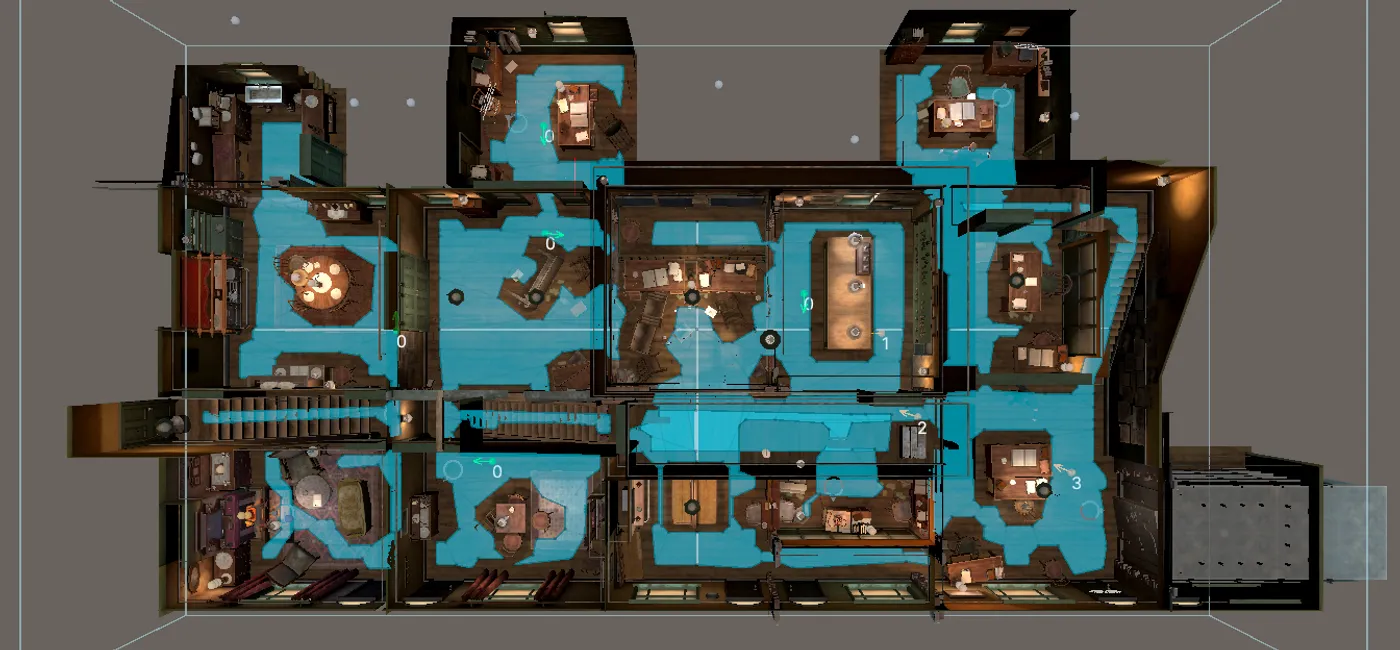
Level Navmesh
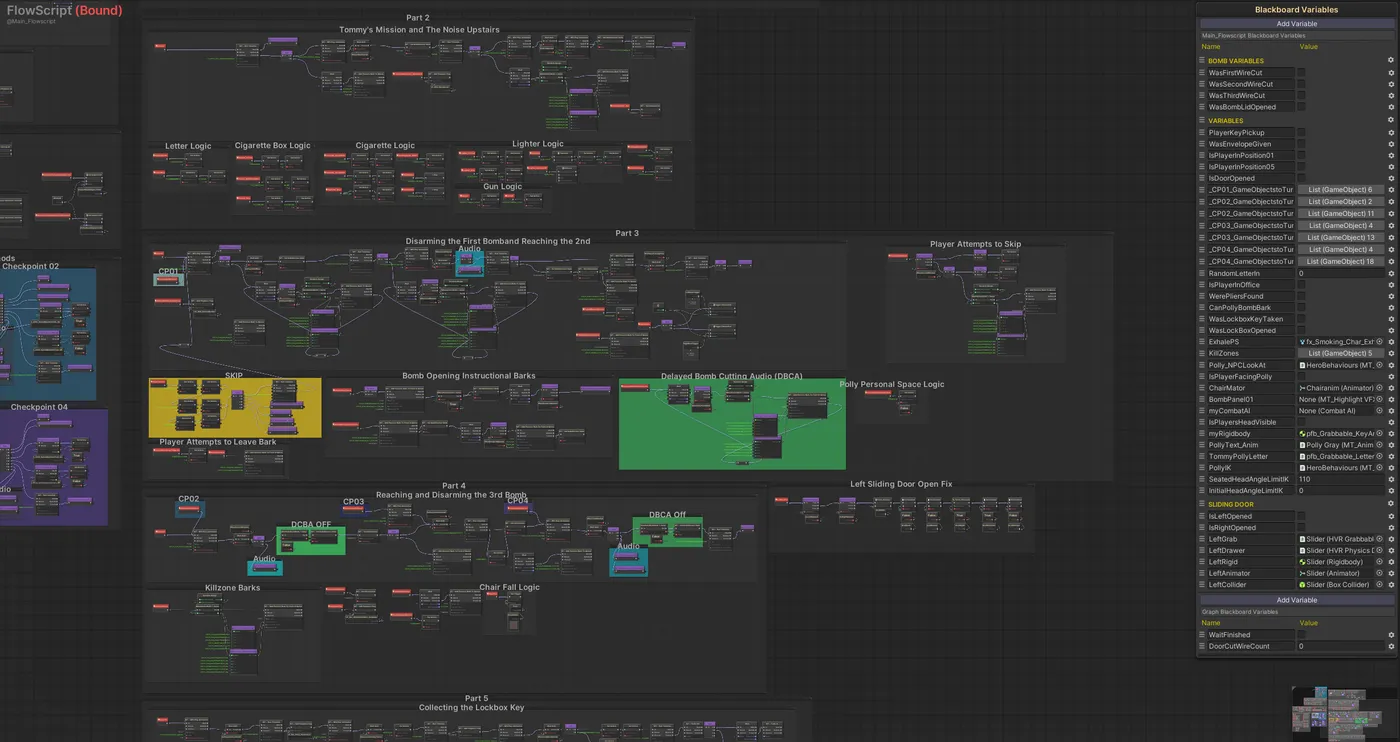
Betting Shop Total Visual Script
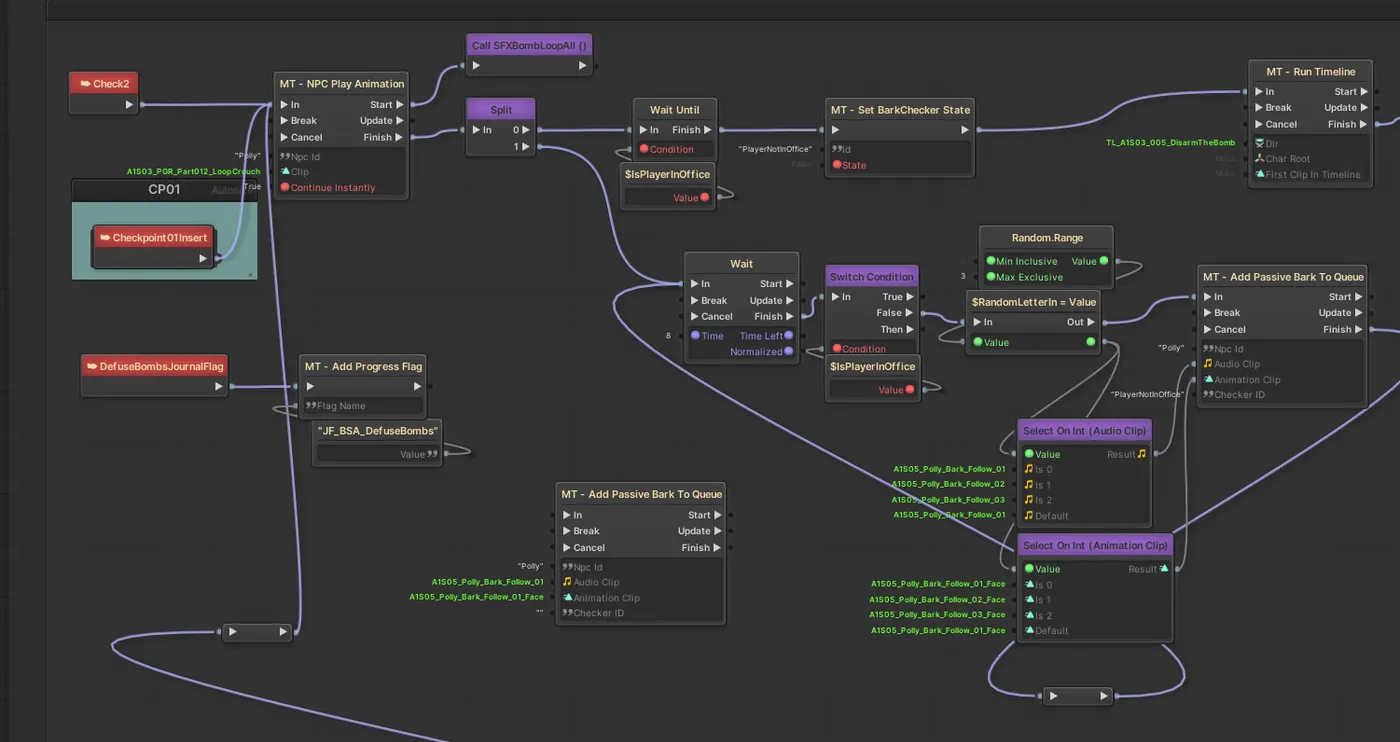
We used FlowScript as our visual scripting tool on Peaky Blinders. The script shown represents the complete logic for this level, covering enemy spawning and combat behaviour, ally NPC narrative and combat logic, as well as checkpointing and the resetting of animation timelines.
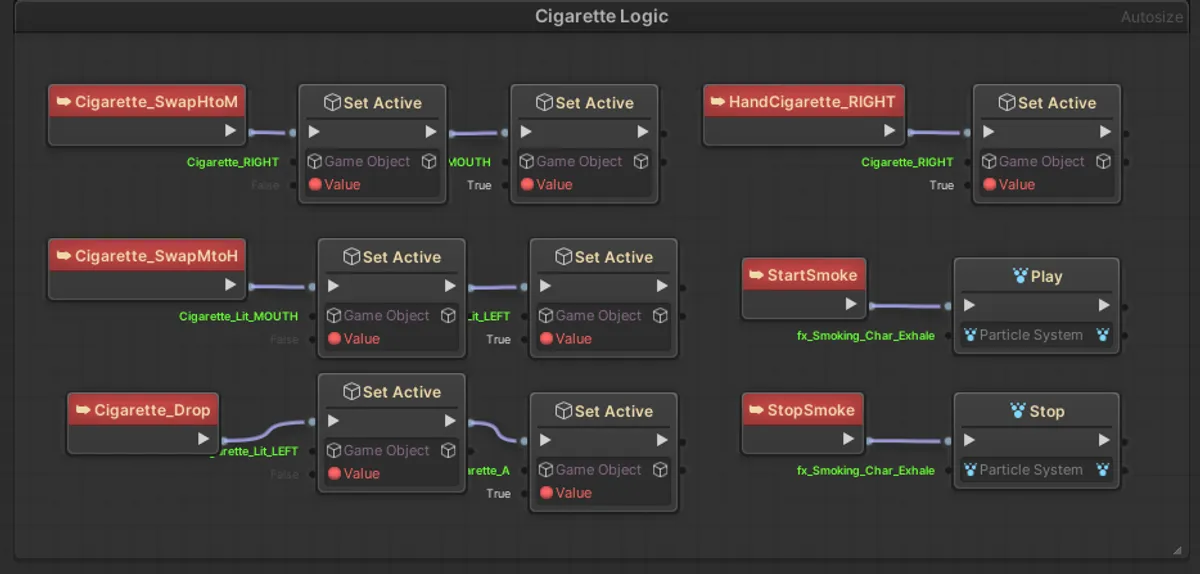
Polly object swapping 01
During conversations with Polly, the player can perform contextual interactions such as lighting her cigarette or handing her a cup of tea. To support this, objects are attached to specific hand bones, allowing us to precisely time the handoff between the player's interactable object and Polly's non-interactable prop.
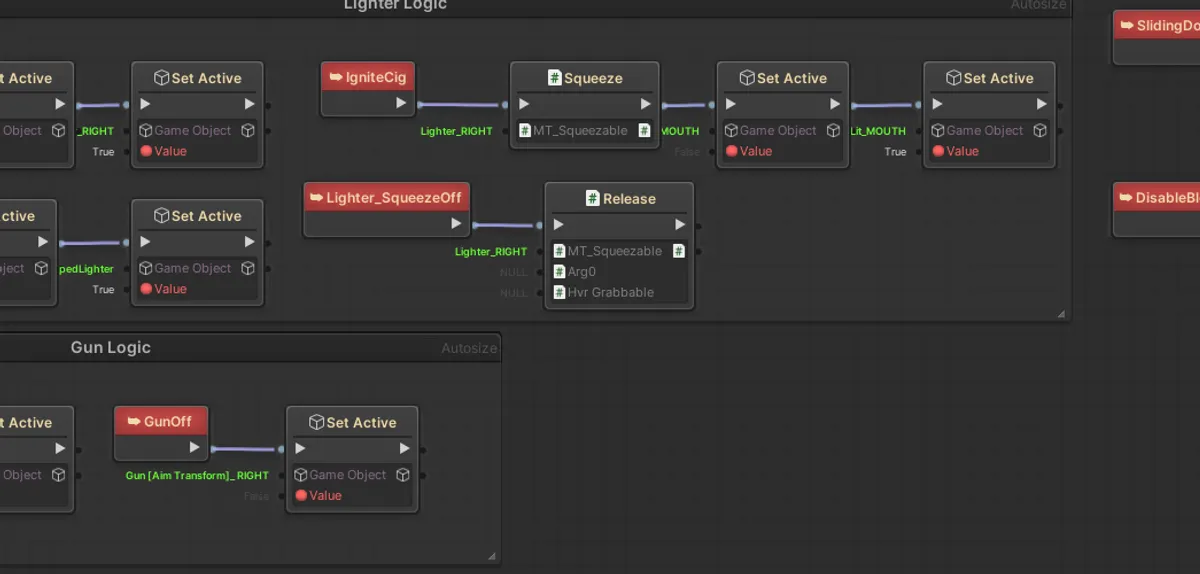
Polly object swapping 02
Checkpointing
Checkpoints in this level and any other that have narrative beats with the characters, required us to pay attention to which animation state they were in, barks to fire, as well as checking enemy NPC combat logic