
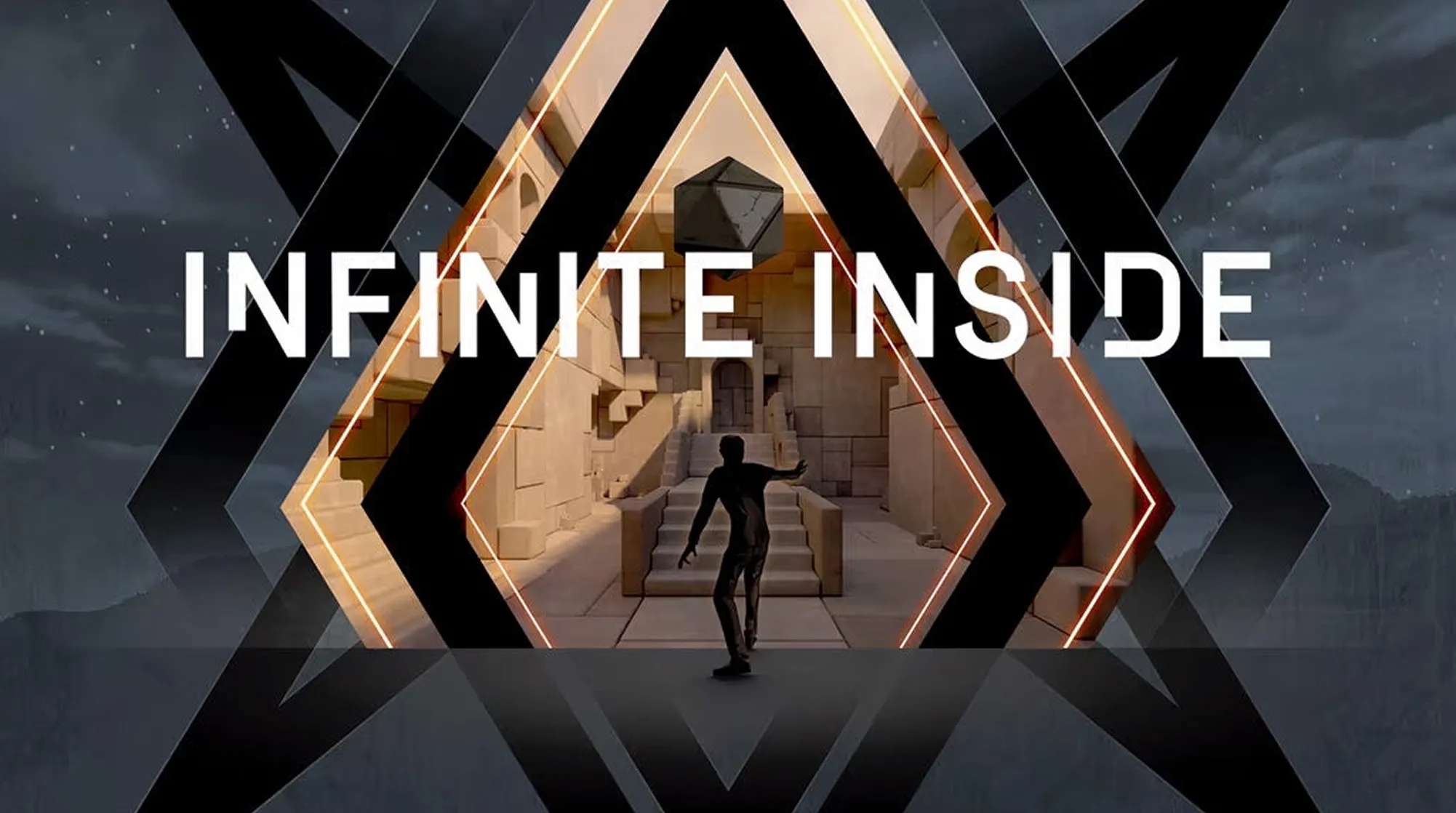
The Infinite Inside
September 2023 – February 2024
Role: Game + Level Designer
The Infinite Inside is a narrative-driven VR experience developed by Maze Theory. I worked as a Game Designer and Level Designer, contributing across level design, gameplay systems, and narrative implementation. My work focused on shaping player experience through pacing, interaction design, and close collaboration with narrative and art to deliver an immersive, story-led VR experience.
Key Responsibilities
- Contributed to level design and player flow across key story moments
- Rapidly prototyped gameplay mechanics with technical designer
- Worked closely with narrative designers to support story pacing and delivery
- Implemented gameplay logic and interactions using engine tools
- Iterated on player experience based on internal feedback and playtesting
Design Pillars
Perspective as Progression
Shifting viewpoints drive player discovery and understanding of the space.
Readable Systems
Simple, clear mechanics support spatial depth without overwhelming the player.
Agency Through Interaction
Player choices directly shape progression and how the environment evolves.
Environmental Storytelling
Narrative is communicated through space, layout, and environmental change rather than explicit exposition.
Immersive Puzzle Driven Gameplay
Infinite Inside was designed to be an immersive MR experience. The idea that these impossible Plinths would spawn in their rooms, hiding secrets and impossible interactions, would only heighten the experience once they entered the Plinth and transitioned to full VR.
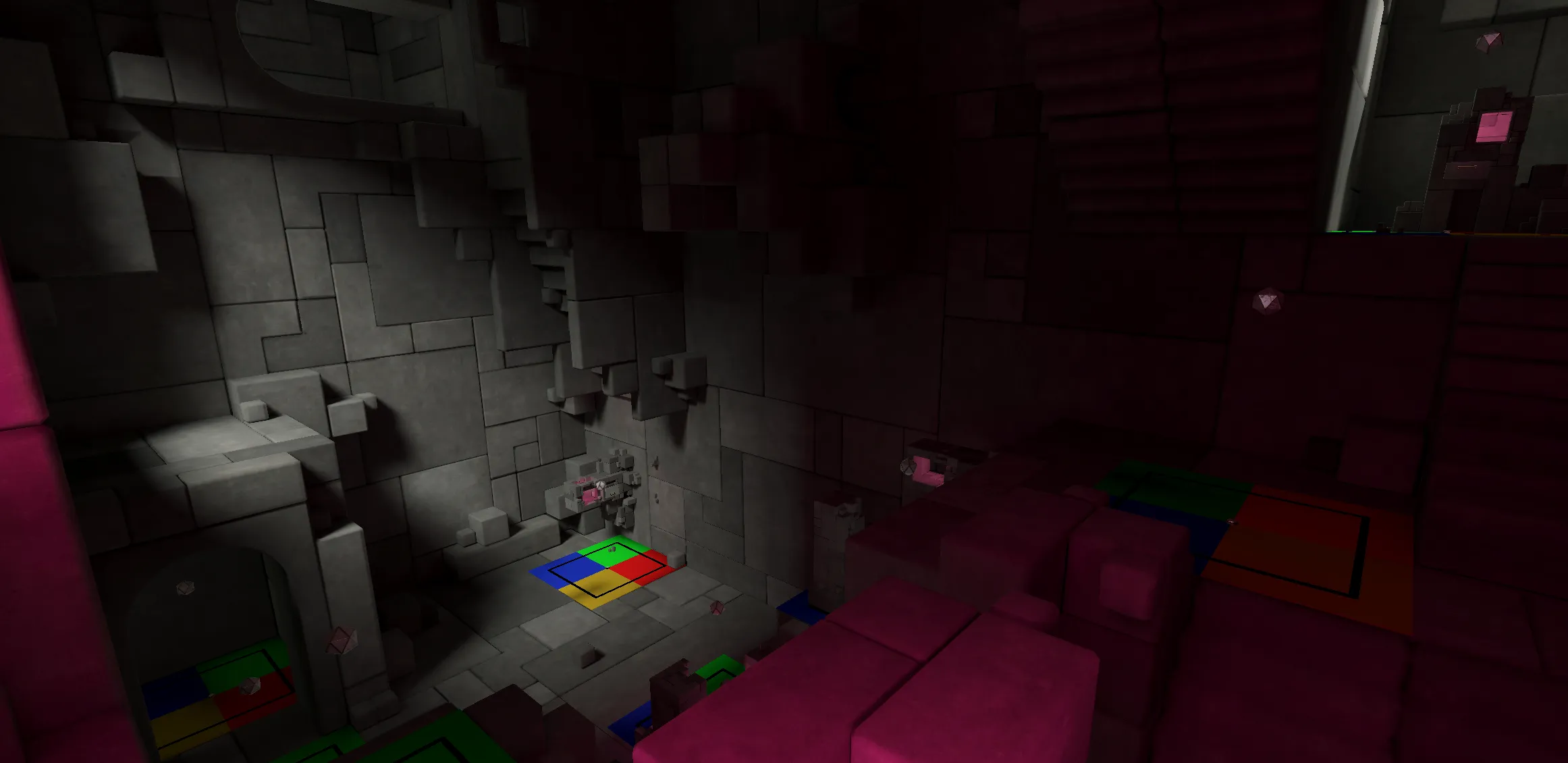
Players were tasked with finding pieces of a 3D geometric puzzle, called Keys. The goal is complete all these keys to progress both the Plinth's state but also the level. Here I am testing our core 3D puzzle mechanics. I was in charge of deciding and modelling the prototype shapes we would use, iterating based on feedback.
Key pieces could be greatly varied, but I designed them into 2 distinct styles. Shell types and Block types. Shell types had a more unique shape to them, thus allowing their silhouette's to be read more easily when it comes to how the pieces connect, though this can be used to also mislead a player based on what they expect. Block types on the other hand require players to look more closely at the inner shapes and negative space of connected pieces to solve them.
Free from Control
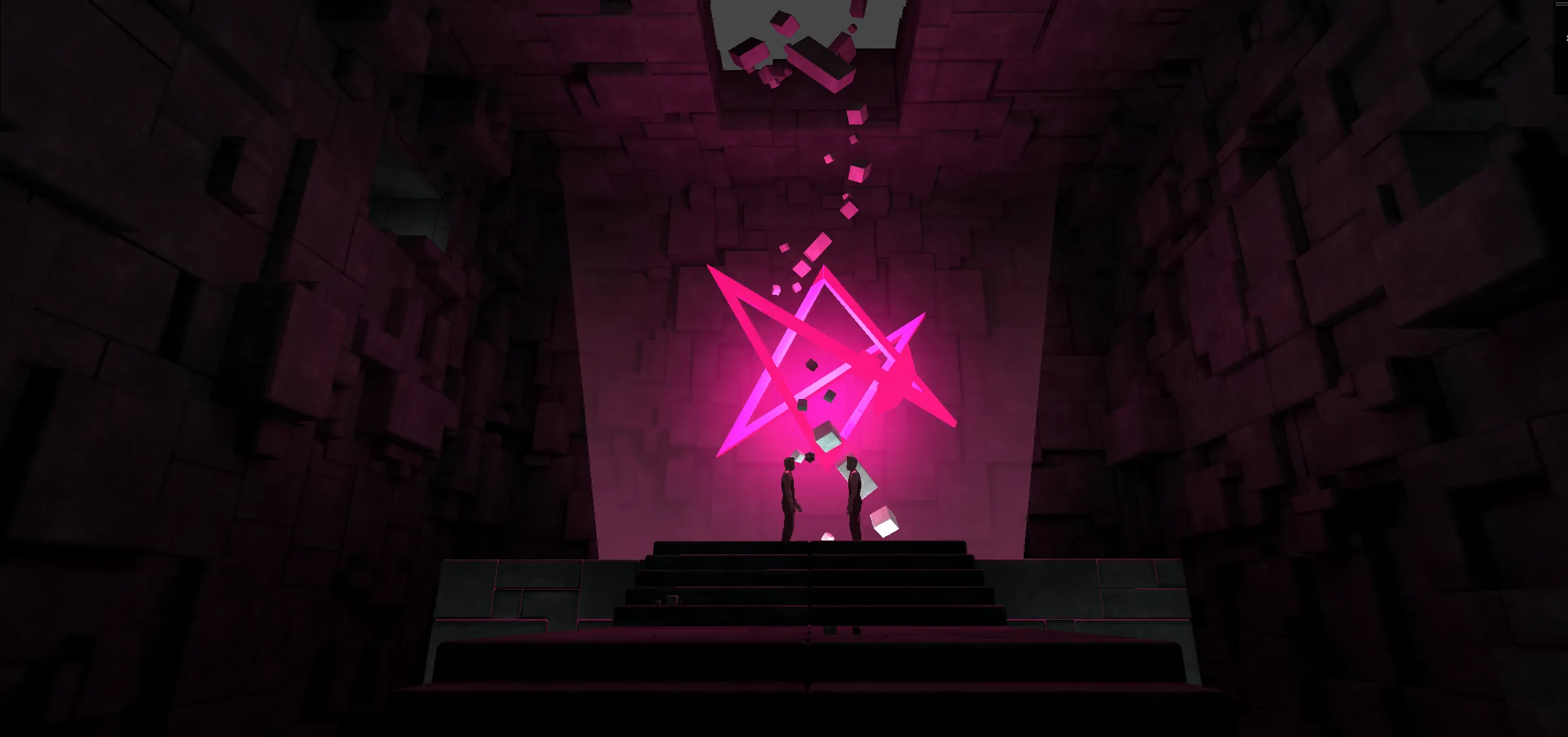
Considering Apple Vision Pro early in development led to a controller-free, grid-based movement system prioritising clarity and responsiveness. To offset the system's simplicity, I designed levels that blended player paths between the exterior and interior of plinths, creating richer spatial progression.
Players would first observe key elements externally as part of a diorama before encountering them internally, where routes were initially blocked. This relationship between outside and inside reinforced a sense of discovery and progression through the level.
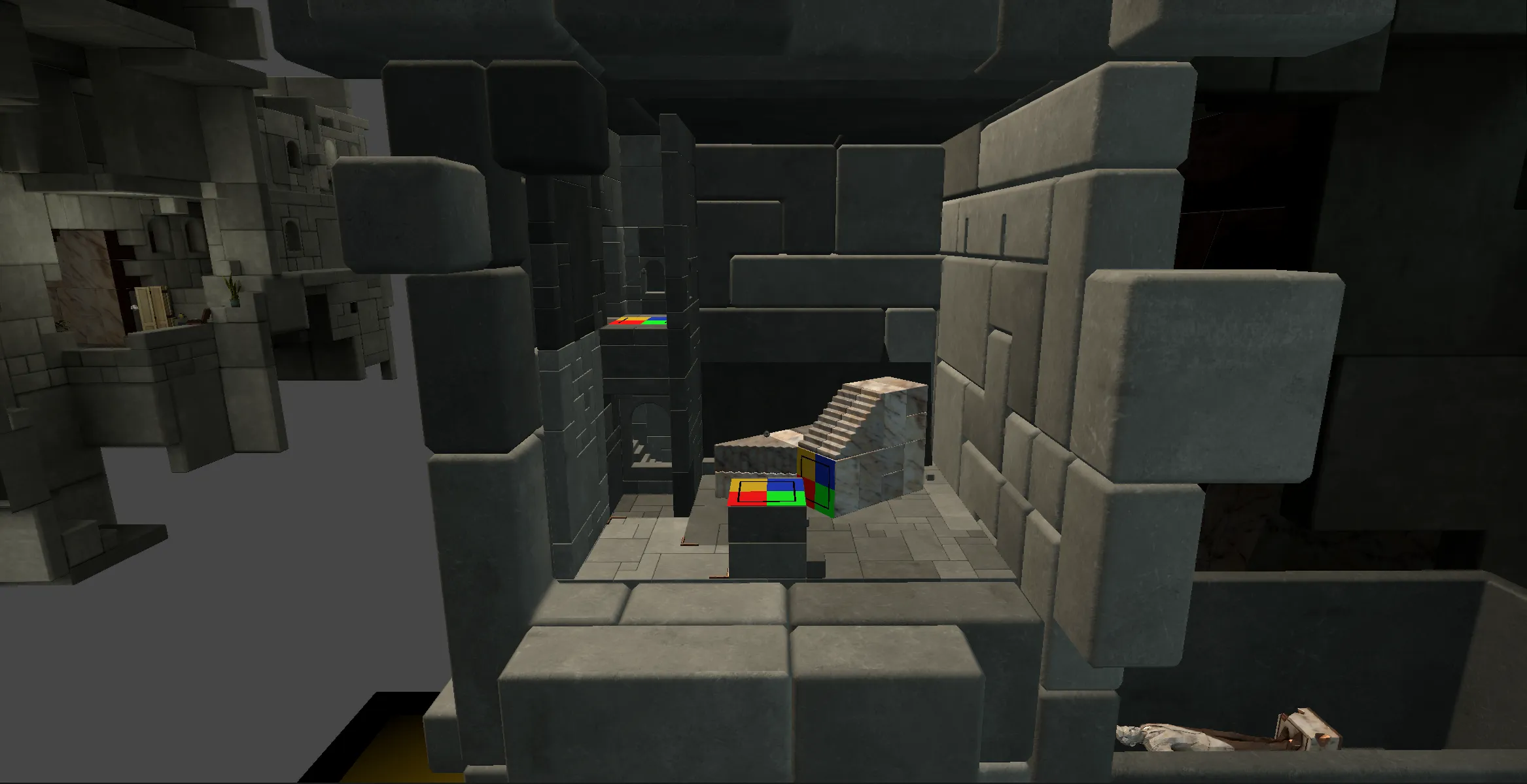
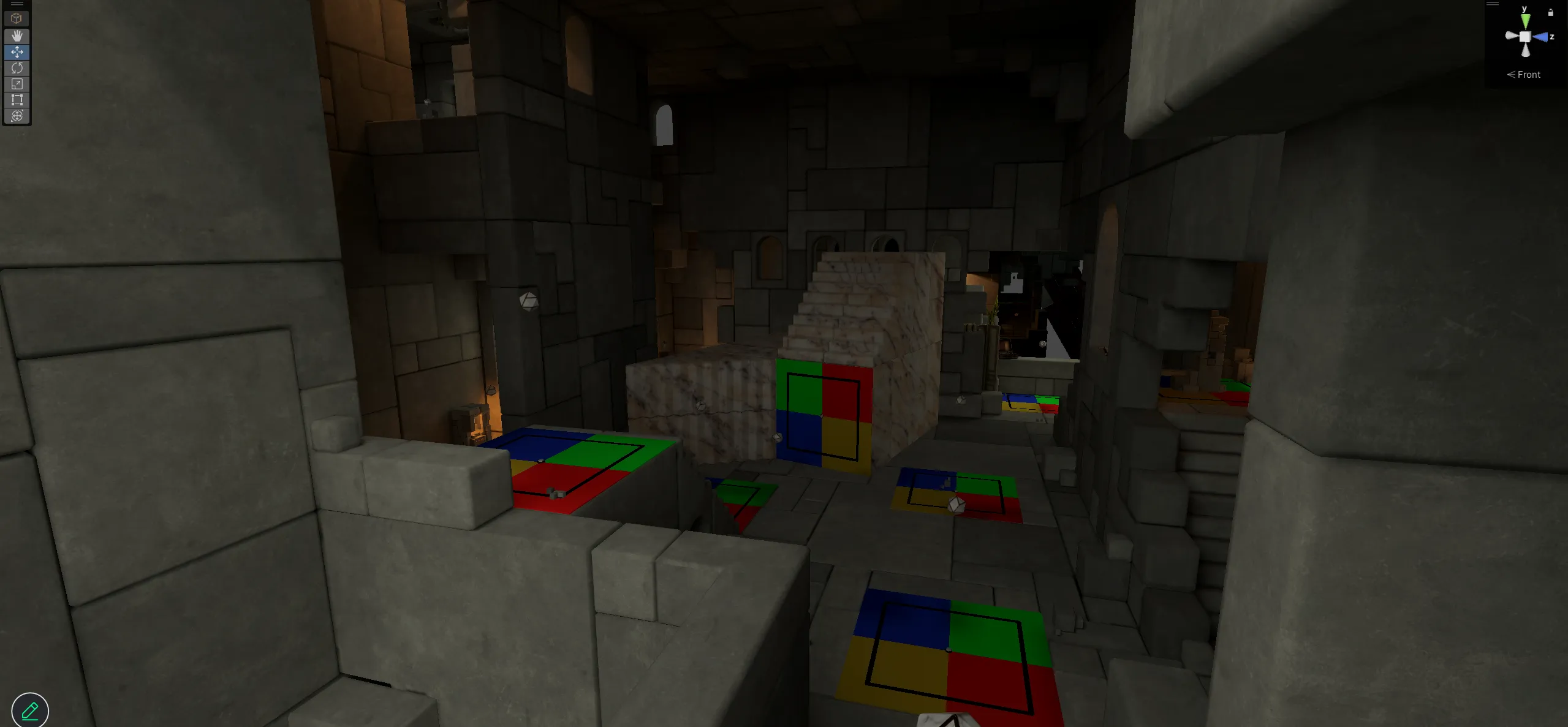
- The player is blocked from continuing in the interior of the plinth
- On the exterior they find a block with a similar pattern as a wall blocking their way
- Going back in they can continue until they find an area with the floor missing
- By using the same block they pulled out before, they can fill in the floor, thus allowing them to progress
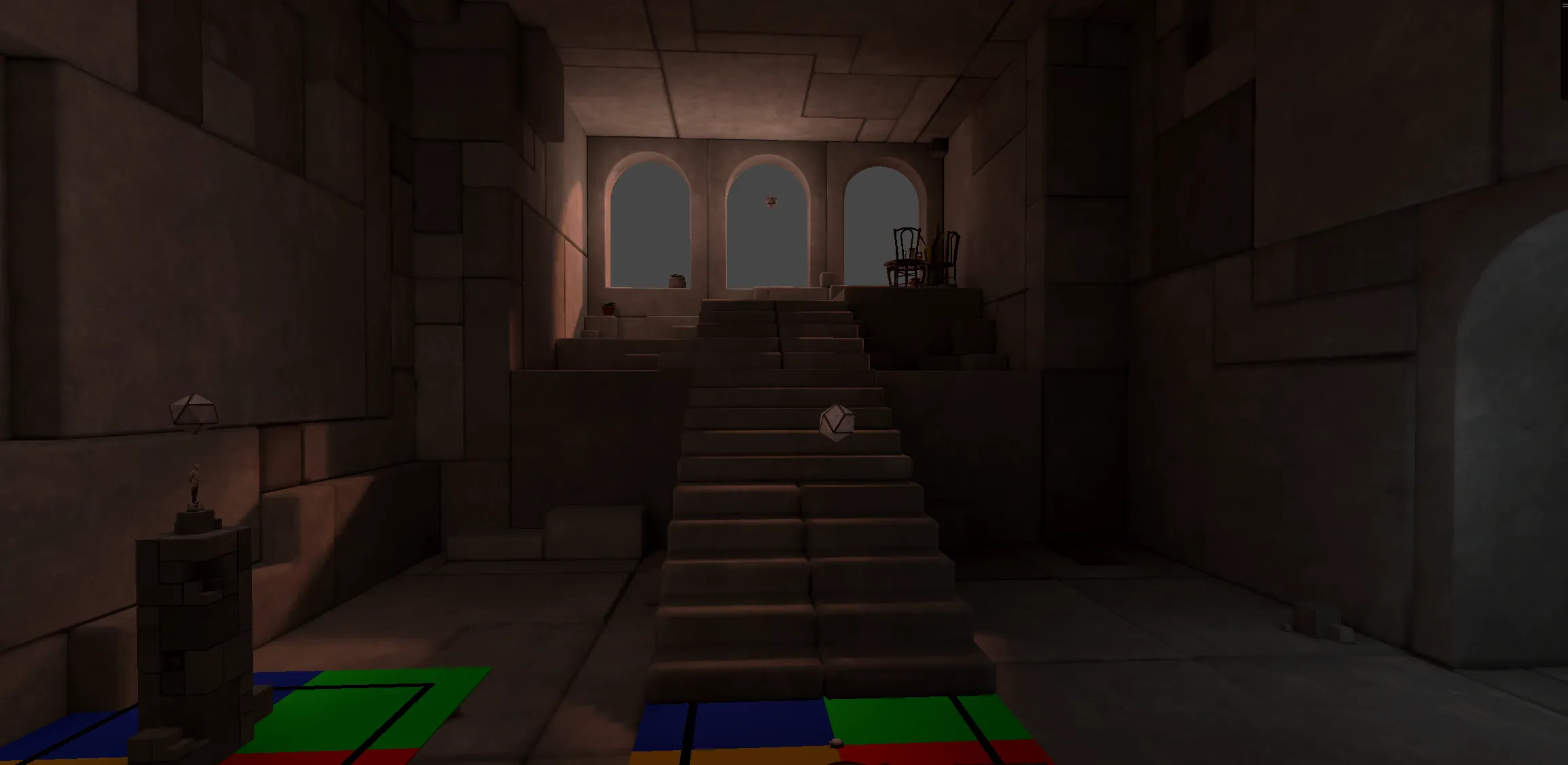
The 4th Level (interior)
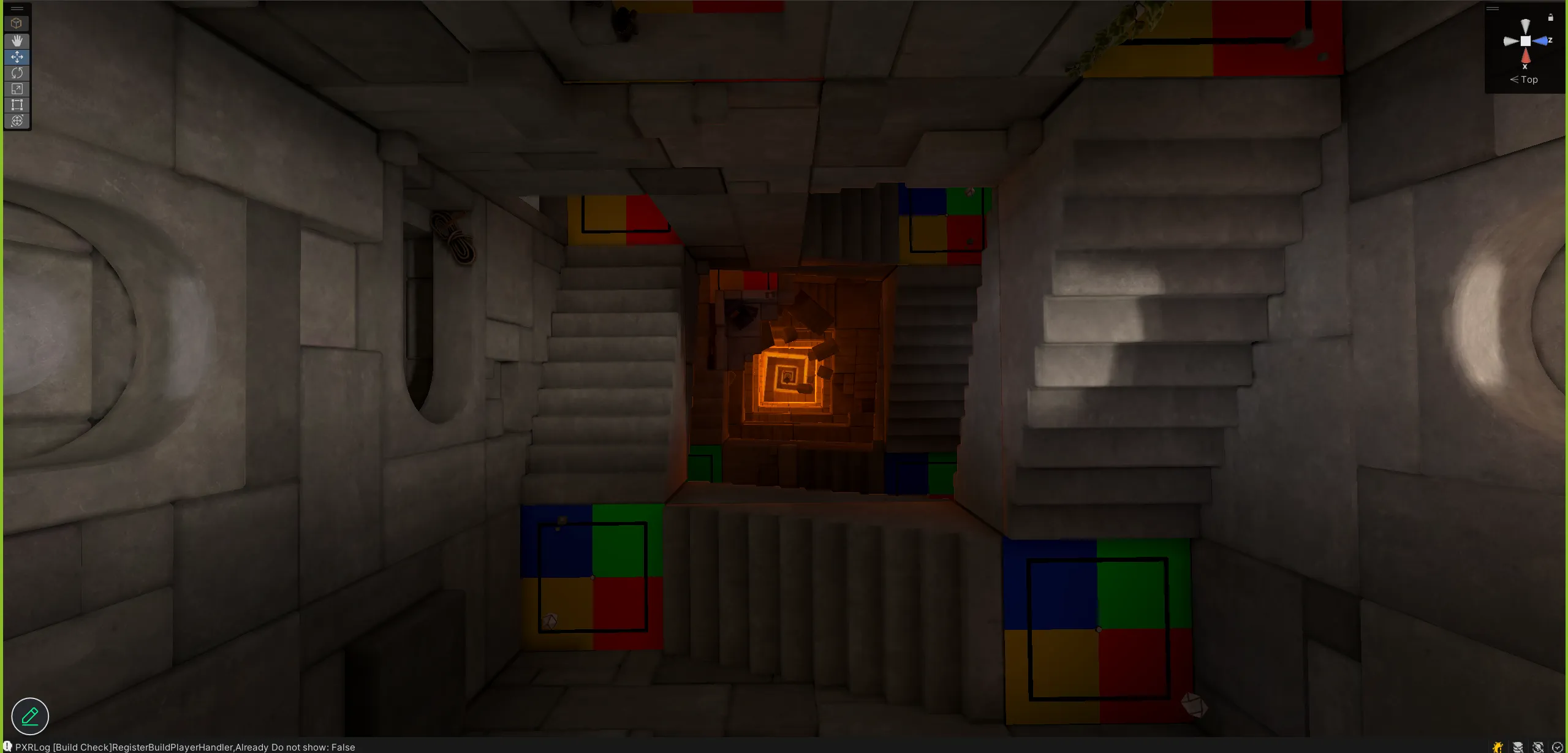
4th Level Spiral Stair
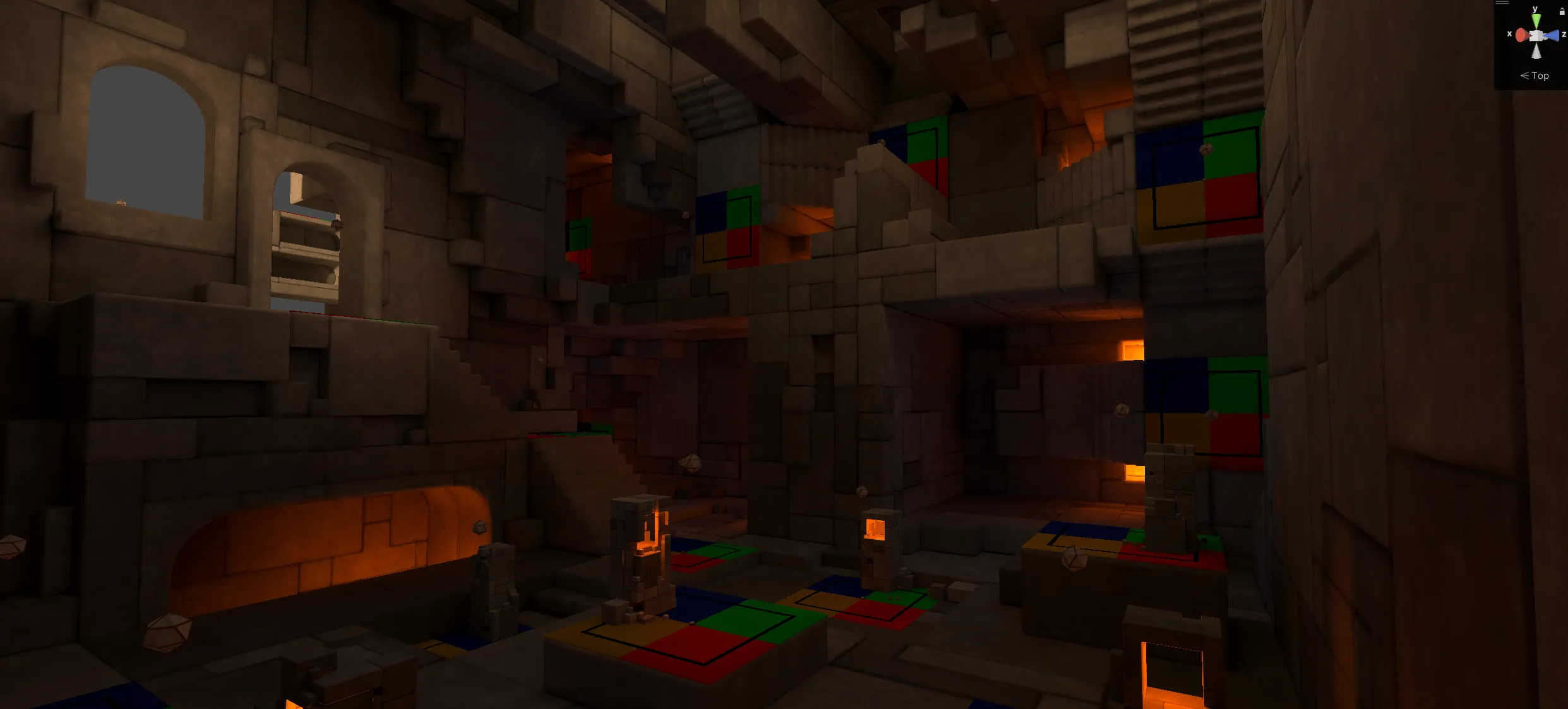
Interior of Diorama